Cyber Angel: A Typeface for the New Digital Era
There's a distinct energy to design from the turn of the millennium. It was a time of dial-up tones giving way to broadband, of chunky CRT monitors and the first glimmers of a connected world. The aesthetic was bold, optimistic, and unapologetically futuristic. This specific Y2K spirit is precisely what the Cyber Angel typeface captures. It’s more than just a premium font; it’s a time capsule and a launchpad, offering a powerful tool for any designer looking to inject speed, confidence, and a touch of sci-fi nostalgia into their work. Its sleek, angular forms feel like they were pulled from a spaceship’s control panel or a cutting-edge tech logo from 2001, yet they remain remarkably versatile for contemporary projects.
The Anatomy of a Digital Guardian
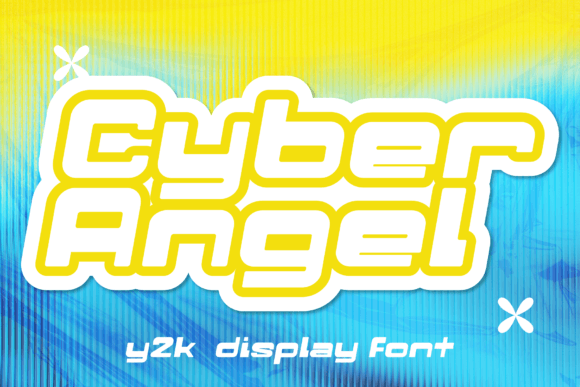
At its core, Cyber Angel is a sans serif font, but that simple label doesn’t do it justice. Its personality is defined by a series of deliberate design choices. The letterforms are built on a foundation of straight lines and sharp, precise angles, creating a sense of order and technological precision. You’ll notice subtle geometric influences, where letters like the 'O' and 'C' aren’t perfect circles but slightly squared-off forms, reinforcing its mechanical, engineered feel. The curves that do exist are tight and controlled, suggesting motion and efficiency rather than softness.
This is a display font through and through. It’s designed to make a statement in headlines, logos, and titles where its full character can shine. The uniform stroke weight across most letters gives it a solid, stable presence, communicating strength and reliability. The overall appeal is one of confident minimalism—it doesn’t need excessive ornamentation to command attention. For designers, this makes it a fantastic creative font for projects that need to feel modern, authoritative, and slightly ahead of the curve. It bridges the gap between nostalgic Y2K design and clean, contemporary modern typography.
Where Cyber Angel Truly Shines: Practical Applications
Knowing a font looks cool is one thing; knowing where to use it is where the real value lies. Cyber Angel isn’t a one-trick pony, but it excels in specific contexts where its personality can enhance the message.
In brand identity, this typeface is a natural fit for tech startups, gaming studios, cybersecurity firms, or any brand wanting to project innovation and forward momentum. Imagine it on a logo design for a new app or as the primary type for a podcast about future trends. Its strength also lends itself well to packaging design for electronics, energy drinks, or any product that wants to feel powerful and cutting-edge.
For digital creators, its utility is broad. It works exceptionally well in web design for hero sections, call-to-action buttons, and navigation menus where clarity and impact are key. It’s also a standout choice for social media graphics, making headers for YouTube videos, Instagram carousels, or Twitch overlays instantly more dynamic. In editorial design, think magazine spreads about technology, automotive features, or music reviews—anywhere you need a headline that grabs the reader by the collar.
Even for personal projects, like crafting a futuristic birthday invitation or designing a bold poster for a home office, Cyber Angel offers a professional-grade design asset that’s easy to use and delivers immediate visual impact.
Making It Work: Font Pairings and Readability
A powerful display font like Cyber Angel needs the right partner to create a balanced and functional design. The key is contrast. Because Cyber Angel is so geometric and impactful, pairing it with a more neutral, readable sans serif font for body text is often the safest and most effective route. Fonts like Inter, Lato, or even a classic like Helvetica provide a clean, unobtrusive counterpart that lets the headlines do the talking without sacrificing readability.
For a different vibe, consider pairing it with a serif font. A transitional serif like Georgia or a modern one like Playfair Display can create a compelling tension between the futuristic and the classic, which can be very effective in editorial design or for brands that blend tradition with innovation. While pairing with a script font or handwritten font can be risky, a very clean, simple script might work for a specific accent word, but it’s a pairing that requires careful testing.
A Designer’s Checklist for Using Cyber Angel
- Evaluate the Project Fit: Does the project’s mood align with Cyber Angel’s personality? It’s perfect for tech, gaming, and modern brands, but likely a poor choice for a children’s storybook or a traditional law firm’s website.
- Test for Readability: Always check how the font performs at the size it will be used. While excellent for large headings, it can become difficult to read in long paragraphs or at very small sizes. Use it for impact, not for body copy.
- Review the Font Family: A good commercial font often includes multiple weights and styles. Check if Cyber Angel comes with bold, light, or italic variations. These can add crucial versatility to your designs, allowing for better visual hierarchy.
- Check the Licensing: Before using it in a commercial project—a client’s logo, a product you sell, a monetized YouTube channel—ensure you have the correct license. Understanding the terms for desktop, web, and app use is essential for professional work.
Ultimately, Cyber Angel is a tool for storytelling. It tells a story of speed, of digital confidence, and of a future imagined from the past. Used thoughtfully, it can elevate a design from merely functional to truly memorable, helping you build a stronger brand identity